
WBL · LIPUS
Treatment Options · Evidence Review
Published in Current Urology
WBL LIPUS for Severe Erectile Dysfunction
A 3-Year Follow-up Study
43 patients · 8 sessions · 3-year follow-up · a complete evidence review
2026 · Department of Urology, Shanghai General Hospital
READING NOTE This article covers three things: the treatments currently available for severe ED, the conditions and limits of each, and whyWBL LIPUS is worth discussing with your doctor as an option All data cited come from peer-reviewed public publications.
80%
3-year follow-up · 20 patients
Able to achieve insertion (SEP-2)
65%
3-year follow-up · 20 patients
Able to maintain until completion (SEP-3)
0
Week-8 assessment · 43 patients
Pain VAS: 0 · No adverse events recorded
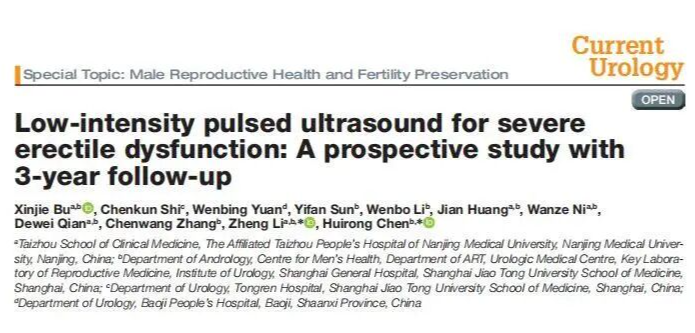
▲Figure 1. First page of the paper (Current Urology, published online 2026)
01DIAGNOSTIC CRITERIA
First, what counts as severe ED
Erectile dysfunction is graded by the IIEF-5 or IIEF-EF score.An IIEF-EF score of 6-10 is clinically defined as severe. Clinically it means difficulty achieving an erection in most intercourse situations, rather than an occasional fluctuation.
Patients at this stage have usually completed baseline assessment and first-line management: lifestyle modification, comorbidity control (blood glucose, blood pressure, blood lipids) and oral PDE5 inhibitors. These drugs work for a considerable proportion of patients, but some still see little benefit even at the maximum recommended dose.
At this point clinicians usually consider second-line options, mainly three:
· Intracavernosal injection:fast onset, but the patient must perform the injection personally, demanding acceptance and adherence
· Vacuum erection device:drug-free, but involves multiple steps and is constrained by the setting of use
· Penile prosthesis implantation:for select refractory patients; it is surgery that requires thorough evaluation and is irreversible
All of these options have clear value within their indications and should not be ranked simplistically. Their shared limitation:a gap between technical feasibility and long-term patient acceptance, which leaves some patients unable to sustain treatment.
02THE EVIDENCE GAP
Why severe ED is so understudied
Past ED research shows a structural skew in study populations: mild-to-moderate cohorts are larger and easier to recruit and follow, so studies abound; severe ED, with complex comorbidities and difficult follow-up, has been relatively understudied.
Clinical research on WBL LIPUS in ED has accumulated since the 2010s, yet previous evidence likewise focused on mild-to-moderate populations.
The primary value of the 2026 study in Current Urology lies exactly here: the subjects were patients with severe ED, followed for up to 3 years.In total 112 subjects were screened, 52 received treatment, and 43 completed the standard course plus the week-8 assessment, forming the primary data cited in this article.
The paper “Low-intensity pulsed ultrasound for severe erectile dysfunction: A prospective study with 3-year follow-up” was published online in Current Urology in September 2026, open access, DOI: 10.1097/CU9.0000000000000369.
03HOW IT IS DELIVERED
What a WBL LIPUS treatment session looks like
The study used the WBL WBL-ED treatment system (explicitly documented in the paper's Methods section, equipped with the ED-ZLT-F applicator); the procedure is performed on the body surface.
The applicator works on 4 sites, 5 minutes each - left and right penile shaft and left and right crura - 20 minutes per session; twice weekly for 4 consecutive weeks, 8 sessions in total.No puncture, incision or anaesthesia is involved at any point.
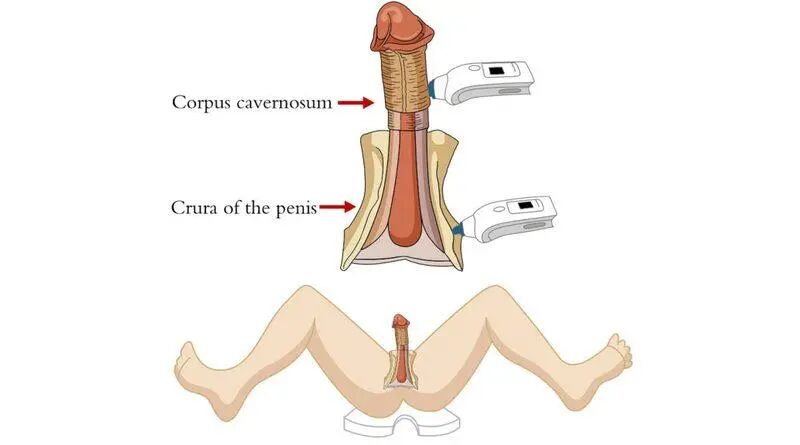
▲Figure 2. Treatment sites (left/right penile shaft and crura, 5 minutes each)
In terms of mechanism, WBL LIPUS works through low-intensity pulsed mechanical waves rather than thermal effects or mechanical fragmentation. The mechanisms discussed in the literature focus on improving local microcirculation and promoting tissue-repair pathways -which is why the treatment is delivered as a course rather than taking effect in a single session.
On safety: in the study, all 43 subjects reported a pain VAS score of 0 after treatment, and no adverse events were recorded. For patients concerned about tolerability and acceptance of the procedure, these data are directly relevant.
04OUTCOMES
The data: week 8 and 3 years
Week 8 (43 completed the course with paired assessment):
6.98→14.53
IIEF-EF score
51.2%
Reaching MCID
81%
Morning erections present
· Mean IIEF-EF improvement of 7.56 points (95%CI 5.38-9.73, p<0.001)
· Median erection hardness score (EHS) rose from grade 1 to grade 3, 31 improved, and none worsened
· PHQ-9 (depression) and GAD-7 (anxiety) scores fell by 2.70 and 2.09 points respectively; psychological measures improved in step
3 years (structured telephone follow-up, 20 completed):
80%
Able to achieve insertion (SEP-2)
65%
Able to maintain until completion (SEP-3)
70%
Self-reported functional improvement
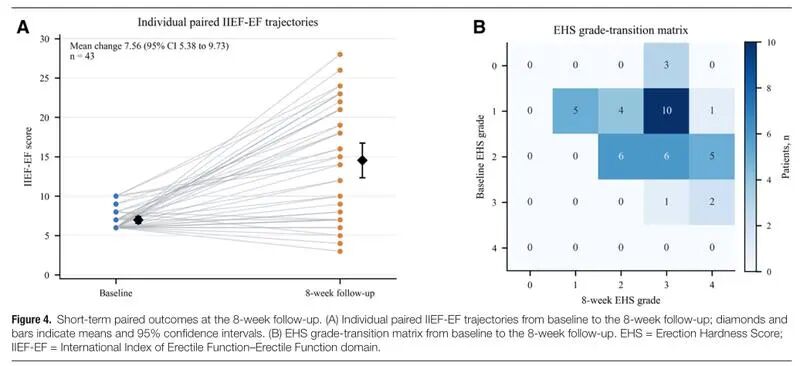
▲Figure 3. Week-8 paired results (A: individual IIEF-EF trajectories; B: EHS grade transition matrix)
The study also ran a sensitivity analysis counting all 23 lost-to-follow-up subjects as “not improved”; the 3-year intention-to-treat (ITT) rate was about 32.6% (14/43).This conservative estimate also appears in the paper.
When evaluating a treatment,
fully disclosing uncertainty is more informative than reporting only the best result.
05CLINICAL MEANING
Clinical significance: a non-surgical option that can be repeated
When oral medication (PDE5 inhibitors) is taken properly at full dose with little response, the case is classified as severe ED. From there, doctors usually have three routes - injecting medication into the penis, using a vacuum device, or prosthesis surgery. All three work, but each carries a cost, and some patients get stuck on exactly those costs and cannot sustain the treatment.
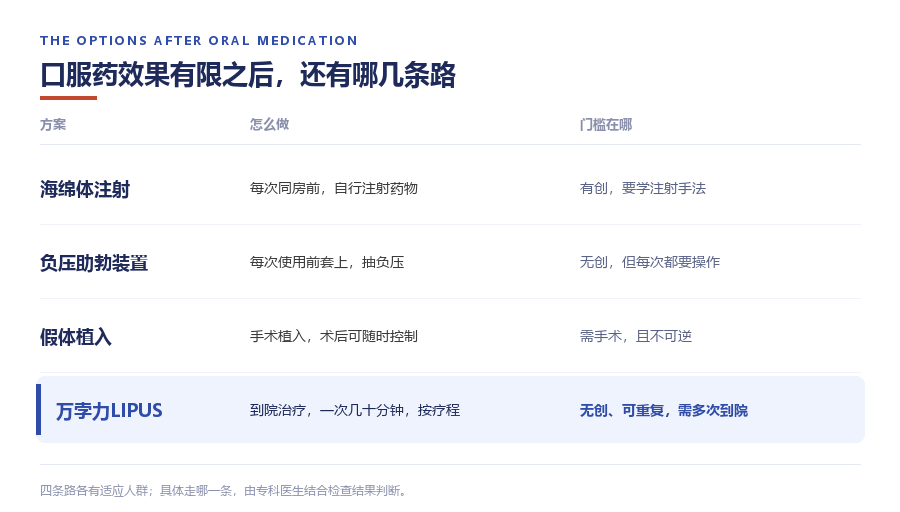
▲Figure 4. Common paths after limited response to oral medication (illustrative)
WBL LIPUS is another route: no injections, no surgery, done lying down, 20 minutes a session, repeated over a course. In this study 43 patients completed 8 sessions with no discontinuation for safety reasons. For those whose medication has been titrated to full dose without response and who are not ready for injections or surgery, it is an option to discuss with the doctor in clinic.
This conclusion has its limits. The study was done at a single hospital, with a single arm and no control group - patients did improve, but how much came from the treatment itself, from psychological effect, or from natural fluctuation cannot be separated with the available data. Of the 43 patients in the 3-year follow-up only 20 completed it, so the paper gives a more conservative figure, 32.6% counting all 23 lost patients as “no effect”. Every number in the text describes how much this group changed on average, not what any individual will experience.
WBL LIPUS and surgery are not alternatives but sequential steps: for those who have not reached the prosthesis stage, or whose condition temporarily rules out surgery, it can be considered first; for those who already need a prosthesis, surgery is the more appropriate choice. Whether it can be done, and how much it may improve, is judged by a urology/andrology physician in clinic based on examination results.
06FROM RESEARCH TO PRACTICE
WBL LIPUS: from study protocol to clinical practice
EVIDENCE TIMELINE
More than three papers in seven years; these are the three key milestones
2019
Mild-to-moderate
Translational Andrology and Urology
Multicentre · randomized double-blind · controlled
2022
Treatment frequency
Journal of Sexual Medicine
Randomized controlled · frequency comparison
2026
Severe
Current Urology
Single-centre single-arm · 8 sessions · 3-year follow-up
More papers were published along the way; these three nodes pushed the population step by step toward severe ED and extended follow-up to 3 years.
From efficacy and treatment frequency to long-term outcomes in severe ED, this line of work spans seven years. The severe-ED segment was completed by WBL LIPUS together with the clinical team.
The technical origins trace back to the advocacy of Academician Guo Yinglu. Wanbeili later worked with Prof. Tom Lue's team at UC San Francisco (UCSF), Prof. Xin Zhong-cheng and other urology experts at home and abroad on years of translational research - the phrase “WBL-ED system, ED-ZLT-F applicator” in the paper's Methods section represents more than a decade of moving this technology from laboratory to clinic.
Wanbeili is a national high-tech enterprise (certificate GR202311004339) and a Beijing “specialized and sophisticated” SME, certified under the ISO 9001:2015 / GB/T 19001-2016 quality management system covering the manufacture and sale of ultrasound therapeutic equipment and accessories.
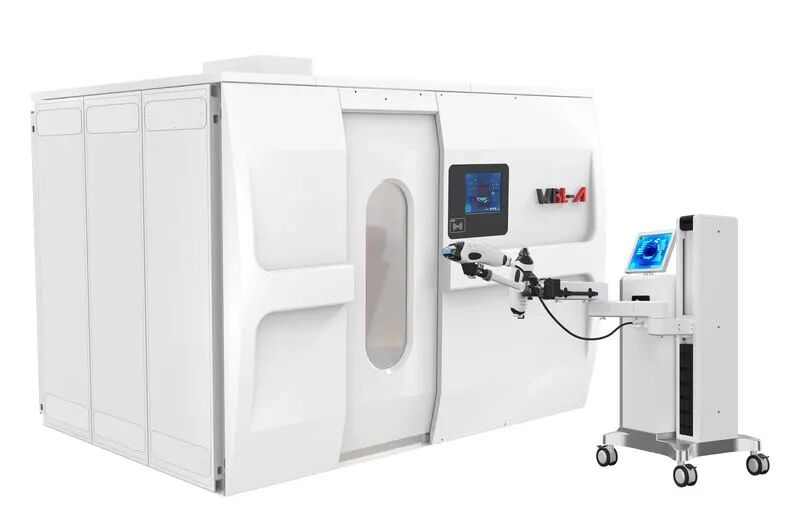
▲Figure 5. WBL WBL-A treatment system (the study protocol documents the WBL-ED system with ED-ZLT-F applicator)
In China the WBL-ED has been deployed in multiple hospitals as the “ED space capsule” - an independent room with a standardized operation path that hard-codes the paper's fixed-site, fixed-duration, fixed-frequency protocol, so it does not depend on an individual operator's technique. The device has entered multiple tertiary and municipal hospitals, including the First People's Hospital of Liangshan Prefecture, Sichuan and the “ED pods” of Kebei Hospital, Shaoxing; overseas it is in use at King Chulalongkorn Memorial Hospital, Thailand.
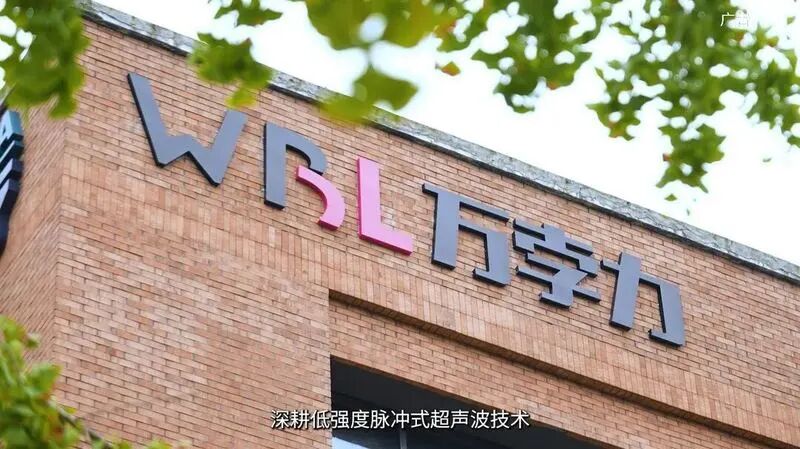
▲Figure 6. CCTV “Science and Innovation China” program: WBL's work on low-intensity pulsed ultrasound
Wider recognition started with CCTV's “Science and Innovation China” - we are currently the first company in China's LIPUS men's-health device field featured on the program; our technical route and industrialization progress have been covered by national media, and in 2025 the product won the IDEA International Design Award.
The study used the WBL WBL-ED treatment system; the model and applicator are documented in the paper's Methods section, and the remaining data can be checked against the original publication.
About Wanbeili | WBL Medical Group
Beijing Wanbeili Medical Devices Co., Ltd. (WBL) is a national high-tech enterprise and a Beijing “specialized and sophisticated” SME, certified under the ISO 9001 quality management system. It focuses on non-invasive men's-health solutions, with LIPUS devices in multiple tertiary and municipal hospitals in China and at King Chulalongkorn Memorial Hospital, Thailand.
This article introduces published medical research findings and general health information; it reflects the study team's published content only and does not constitute diagnosis or treatment advice for any individual. Statements are subject to the original paper and to regulatory registration status in each jurisdiction. If symptoms persist for more than 3 months, please visit the urology or andrology department of a qualified hospital.