
65 | randomized controlled participants |
8 over 4 weeks | standard LIPUS course |
−5.66 | mean pain-score reduction in the LIPUS group |
0 | treatment discontinuations due to adverse events |
Study Design: WBL Device and Standard Treatment Protocol
A paper titled “Evaluation of a low-intensity pulsed ultrasound for chronic prostatitis type IIIb/chronic pelvic pain syndrome: a randomized controlled trial” has been formally published in the international journal Frontiers in Reproductive Health (Vol. 7, 2025, article 1714803).
The study was conducted by Prof. Bodong Lü’s team at the Second Affiliated Hospital of Zhejiang University School of Medicine, together with Pinghu First People’s Hospital and other institutions. The therapeutic device used was the WBL-ED low-intensity pulsed ultrasound therapy system from WBL Medical.
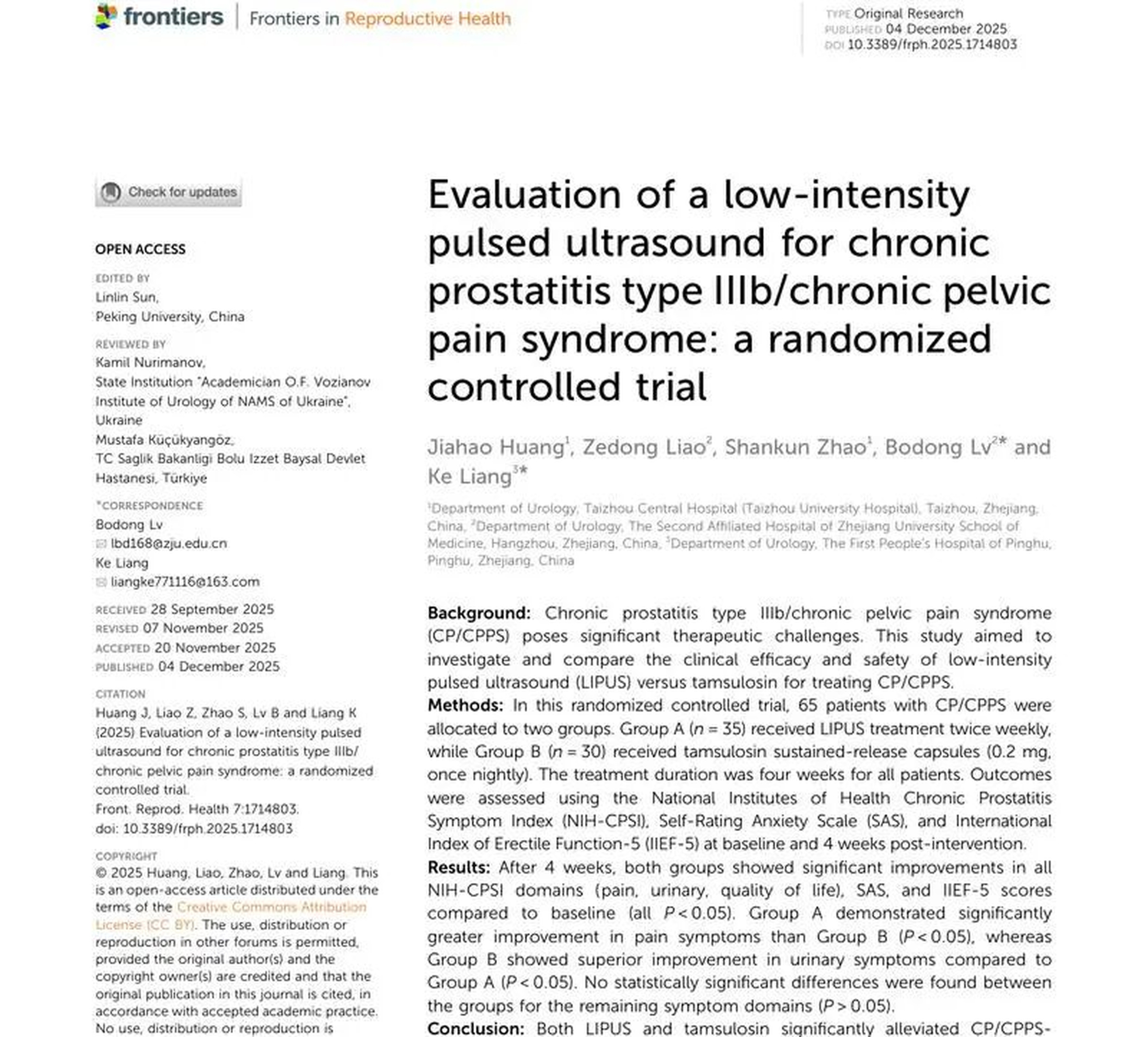
▲ Fig.1 The paper published online in Frontiers in Reproductive Health — first page
The methods section states that transperineal LIPUS was delivered using a Y-shaped (ring) probe (WBL-ED device, Beijing WBL Medical Devices Co., Ltd.). The first session used an intensity of 300 mW/cm², increased to 360 mW/cm² from sessions 2–8 to reduce treatment adaptation. Patients lay supine with hips abducted and flexed, and the probe was held perpendicular to the mid-point of the perineal body (2 cm anterior to the anus, 1 cm posterior to the scrotum), with ultrasound coupling gel applied. Each session lasted about 20 minutes, twice weekly (1–2 days apart), for 4 weeks — 8 sessions in total.
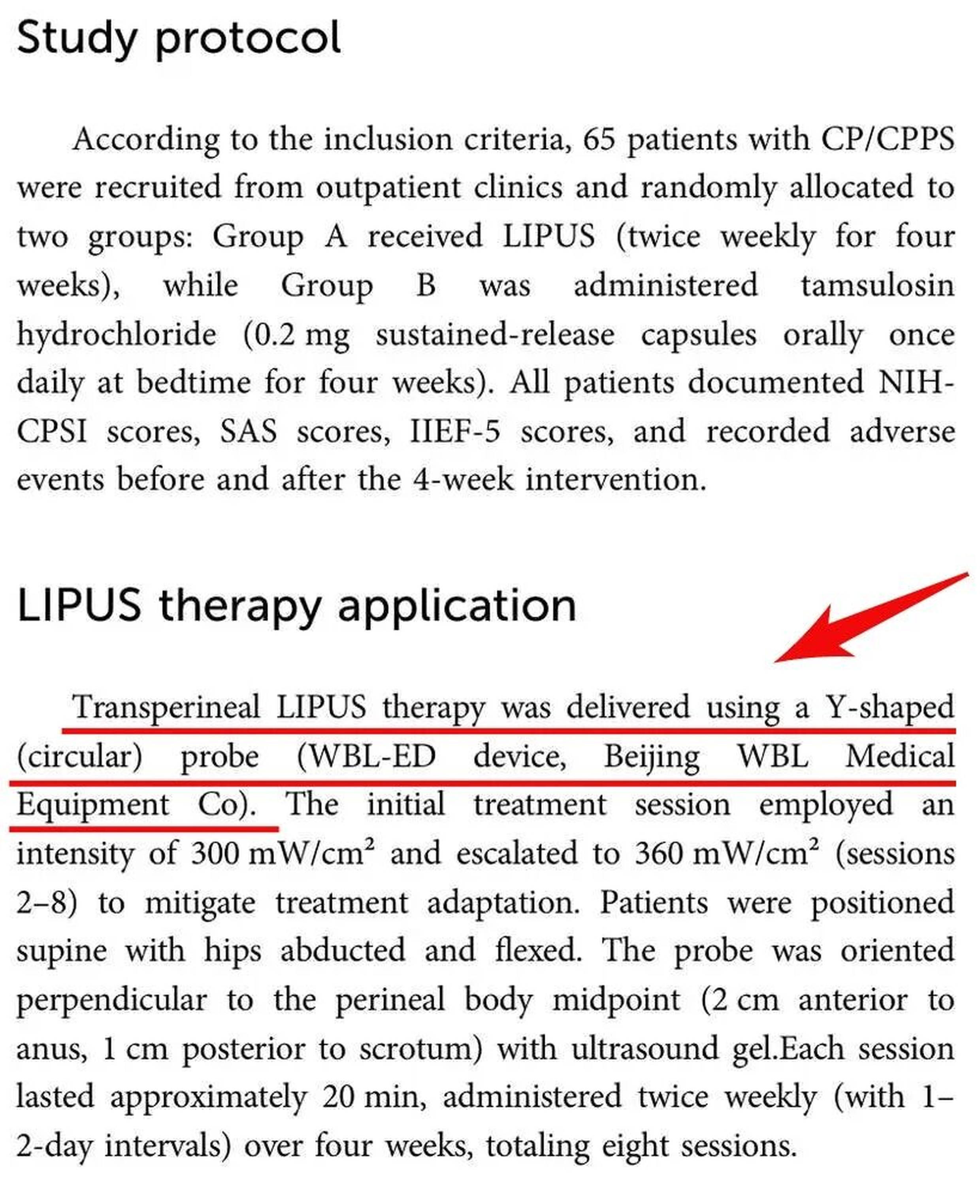
▲ Fig.2 Original paper — study protocol and LIPUS treatment method (excerpt from Materials and methods)
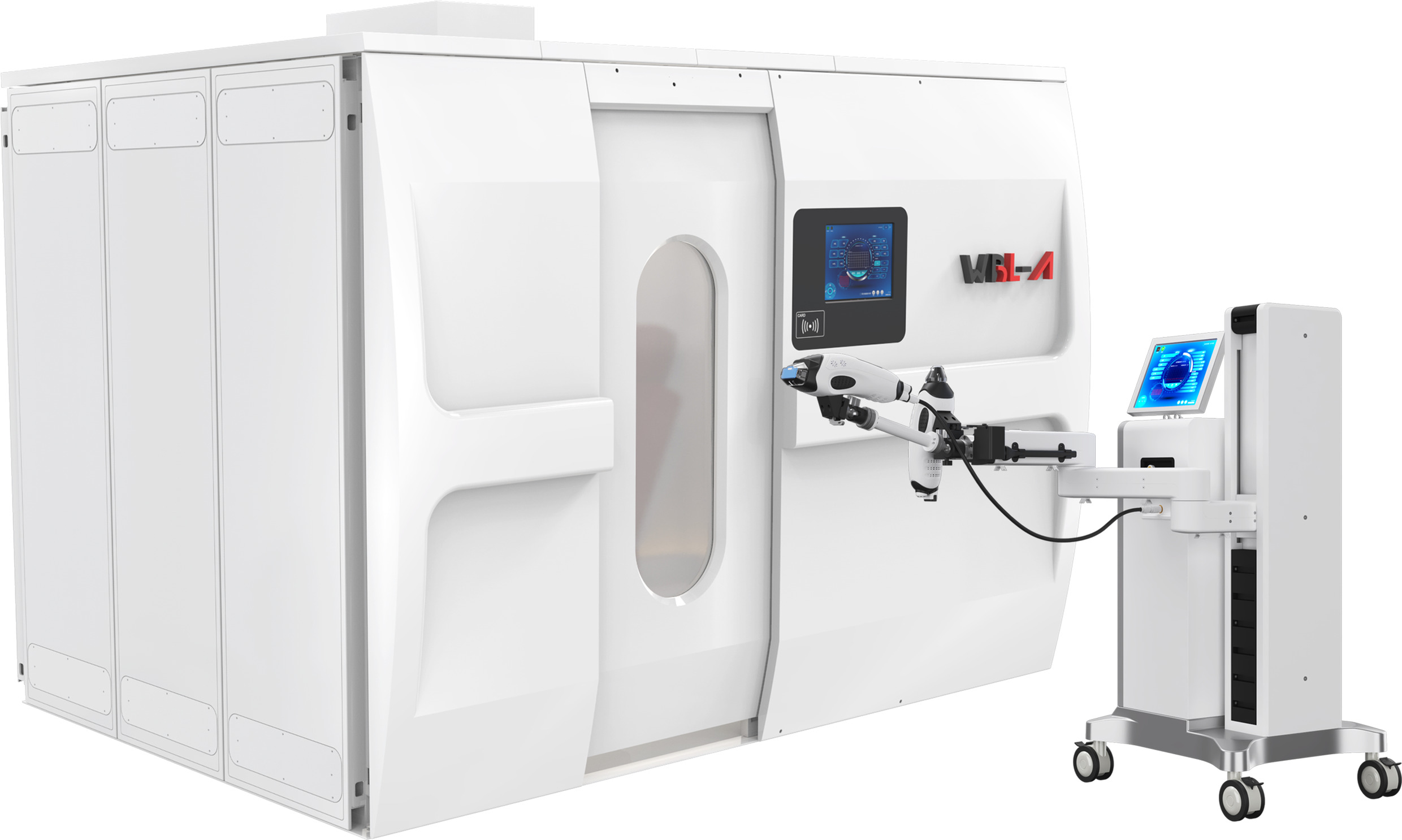
▲ Fig.3 WBL LIPUS low-intensity pulsed ultrasound therapy device
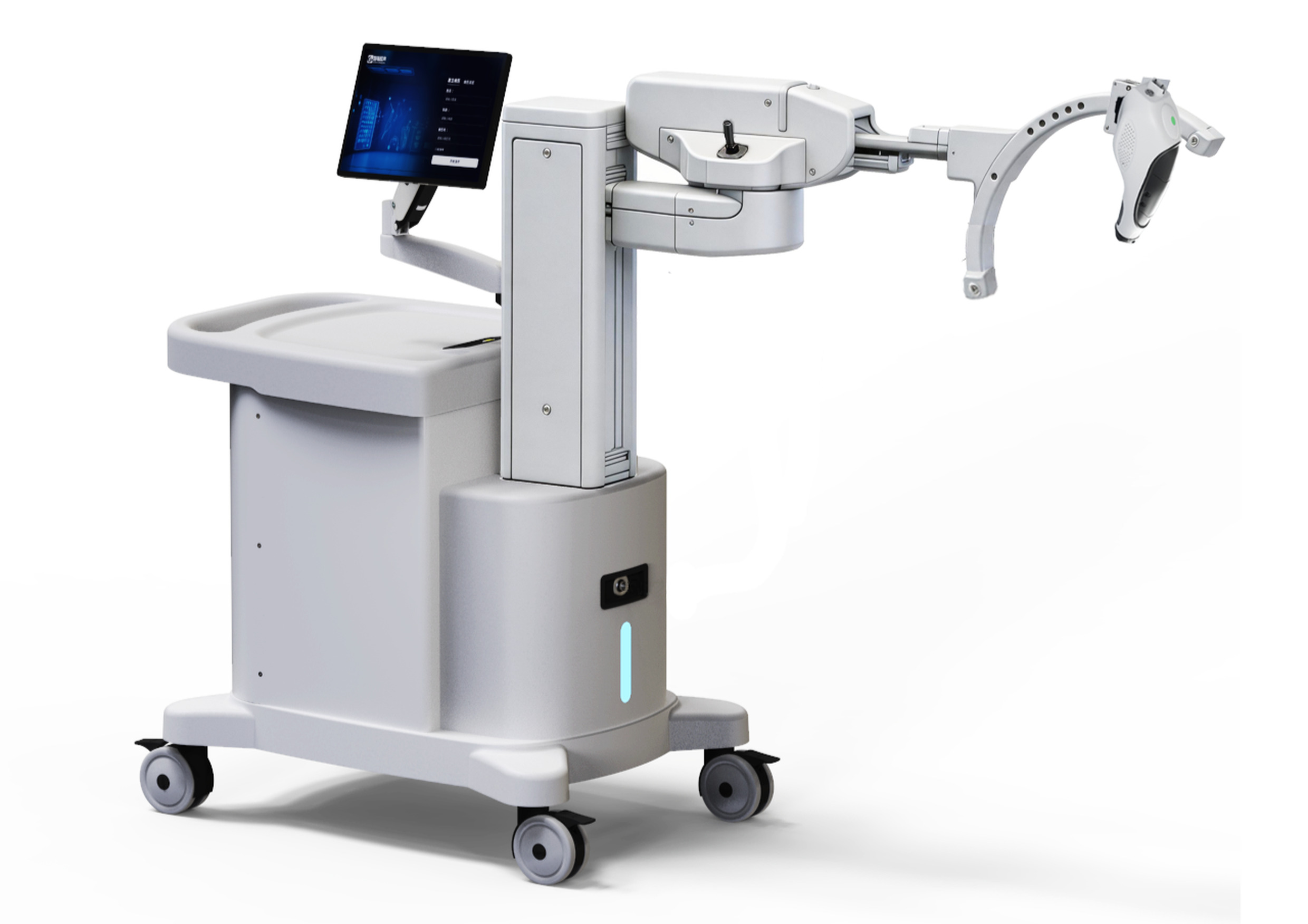
▲ Fig.4 WBL LIPUS extracorporeal pulsed ultrasound pelvic floor therapy platform
This was a prospective, two-centre randomized controlled trial. From January 2022 to December 2024, 65 patients with NIH type III CP/CPPS were enrolled consecutively, aged 18–56, with a mean disease duration of 12.64±4.56 months. Baseline characteristics such as age and disease duration did not differ significantly between the two groups (P>0.05), indicating comparability.
Group A (n=35): LIPUS treatment, twice weekly for 4 consecutive weeks — 8 sessions in total.
Group B (n=30): oral tamsulosin hydrochloride 0.2 mg sustained-release capsules, once nightly before bed, for 4 weeks.
Assessment tools: NIH-CPSI (Chronic Prostatitis Symptom Index), SAS (Self-Rating Anxiety Scale) and IIEF-5 (International Index of Erectile Function-5).
Assessment time points: baseline and 4 weeks after intervention.
4-Week Results: Significant Improvement in Both Groups
After 4 weeks of treatment, compared with baseline, both groups showed statistically significant improvement across all NIH-CPSI domains (pain, voiding and quality of life), as well as in SAS and IIEF-5 scores (all P<0.05).
Indicator | LIPUS (n=35) | Tamsulosin (n=30) |
NIH-CPSI total | 24.26±7.54→14.46±4.27 | 24.93±7.03→15.53±5.36 |
Pain | 11.26±4.99→5.60±2.63 | 11.47±5.19→7.83±4.22 |
Voiding | 4.80±2.39→3.23±1.77 | 4.93±2.53→2.13±1.48 |
Quality of life | 8.20±2.42→5.63±1.83 | 8.53±2.47→5.57±1.61 |
SAS anxiety | 39.54±8.57→33.43±5.60 | 40.20±8.48→34.10±4.75 |
IIEF-5 | 21.00→23.00 | 21.50→23.50 |
Note: values shown are before → after treatment. IIEF-5 is a non-normally distributed measure and is presented as median (the paper reports the 25th and 75th percentiles); other indicators are mean ± SD. All within-group before/after comparisons were P<0.05. Bold marks the pelvic pain domain — the improvement was greater in the LIPUS group than in the tamsulosin group (P<0.05).
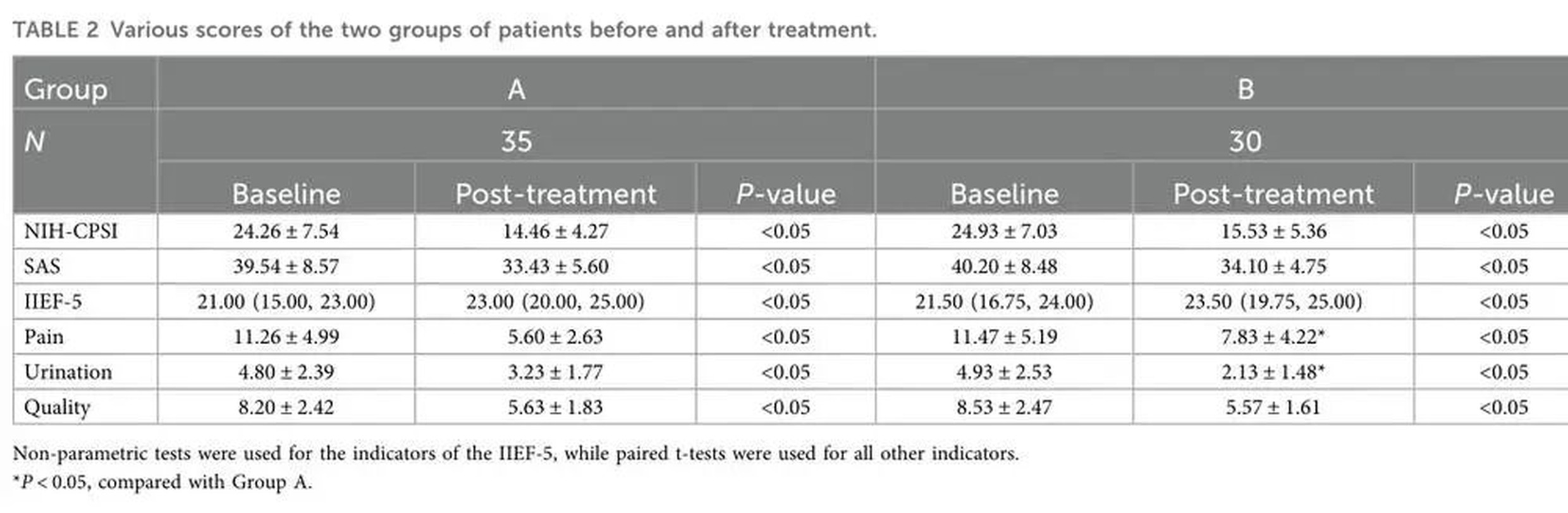
▲ Fig.5 Original paper — Table 2: scores before and after treatment in both groups
Greater Pain Improvement: The Differential Profile of LIPUS
The most closely watched finding was that the two interventions showed distinct therapeutic profiles. For pelvic pain, the improvement in the LIPUS group was significantly greater than in the tamsulosin group (P<0.05): the pain score fell from 11.26±4.99 to 5.60±2.63 in the LIPUS group (a mean reduction of 5.66 points), versus 11.47±5.19 to 7.83±4.22 in the tamsulosin group (a mean reduction of 3.64 points).
For quality of life, anxiety (SAS) and erectile function (IIEF-5), the improvements were comparable between the two groups, with no statistically significant difference (P>0.05); voiding symptoms also improved significantly from baseline in both groups. Overall, the advantage of LIPUS centred on the pelvic pain domain — the symptom that troubles CP/CPPS patients most.
“LIPUS has already demonstrated confirmed efficacy in erectile dysfunction through multicentre randomized trials. Our study confirms that LIPUS treatment produced significant pain relief, consistent with previous mechanistic findings — LIPUS may reduce inflammation and relieve pain by down-regulating inflammatory mediators such as COX-2 and IL-1β.”
— from the original paper
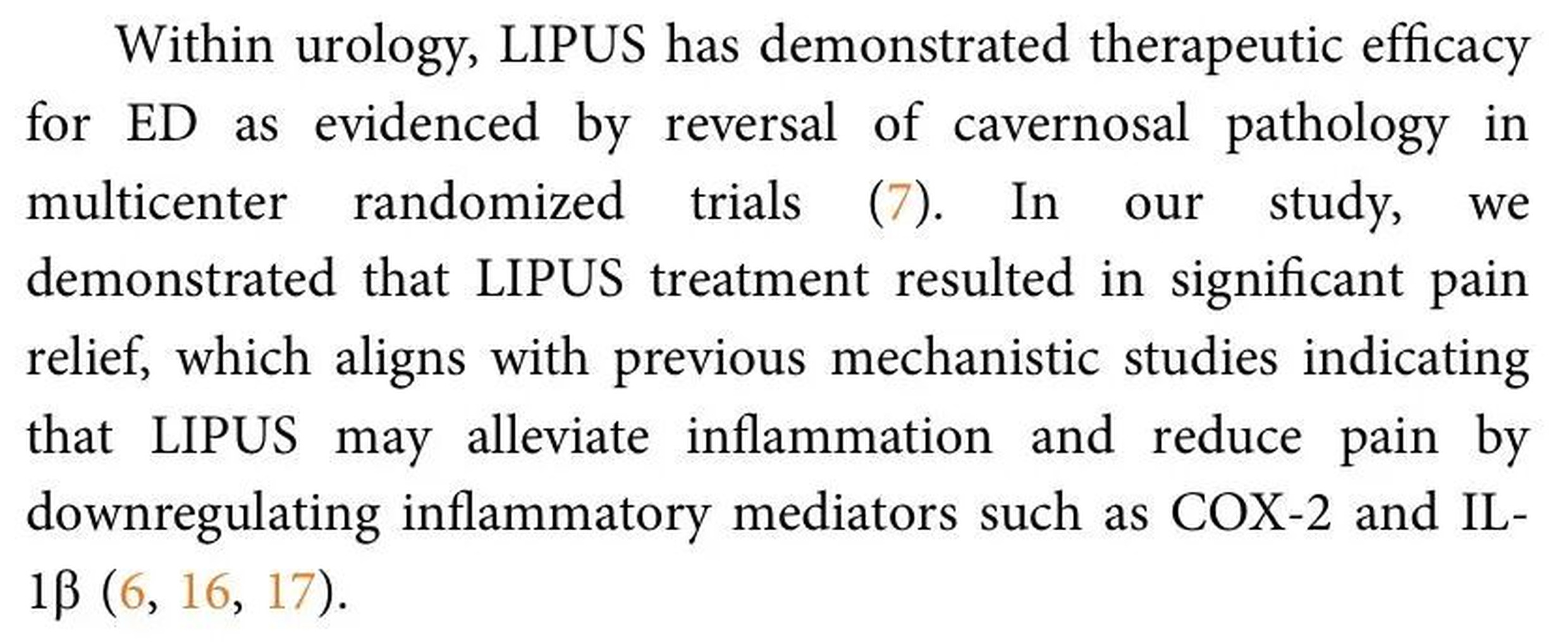
▲ Fig.6 Original paper — LIPUS pain relief and anti-inflammatory mechanism (excerpt from Discussion)
LIPUS is a non-invasive physical therapy: applied extracorporeally through the perineum with no incision, about 20 minutes per session, twice weekly, 8 sessions over 4 weeks to complete the standard course. For CP/CPPS patients whose main complaint is pain and who wish to reduce the burden of long-term medication, this offers a new option.
The goal of treatment in CP/CPPS is mainly symptom relief and improved quality of life. In this study, the advantage of LIPUS in pain — a core symptom — provides a non-invasive physical therapy option for the CP/CPPS population whose main concern is pain.
Safety: No Treatment Discontinued Due to Adverse Events
In terms of safety, neither group experienced serious adverse events requiring discontinuation of treatment; a few cases reported transient, self-limiting mild discomfort, which did not affect the treatment course.
WBL LIPUS is a non-invasive, safe form of low-energy therapy characterised by a minimal thermal effect; it acts mainly through non-thermal biological effects such as acoustic cavitation and acoustic streaming.
What This Study Means
For WBL, this is important academic evidence: the study by Prof. Bodong Lü’s team at the Second Affiliated Hospital of Zhejiang University School of Medicine fully documents the standardised clinical workflow, the 4-week randomized controlled data and the safety observations for the WBL-ED device in the CP/CPPS population, and has been formally published following international peer review.
The researchers also look ahead: combining LIPUS with tamsulosin sustained-release formulations may offer a better approach to managing CP/CPPS symptoms (pain and voiding) — a direction worth exploring further in subsequent studies.
Before this, WBL LIPUS had already built a continuously extending body of clinical evidence: from a multicentre randomized double-blind sham-controlled study in mild-to-moderate ED (Transl Androl Urol, 2019), to a randomized study comparing three versus two sessions per week (J Sex Med, 2022), and to a 3-year follow-up study in severe ED (Current Urology, 2026). The publication of this CP/CPPS randomized controlled trial marks a further expansion of WBL LIPUS clinical exploration from erectile dysfunction into chronic prostatitis/chronic pelvic pain syndrome.
It should be noted that whether a patient is suitable for LIPUS treatment still requires comprehensive assessment and an individualised plan by a professional urologist or andrologist.
Non-invasive exploration of chronic pelvic pain now has one more piece of peer-reviewed randomized controlled evidence.
Citation: Huang J, Liao Z, Zhao S, Lv B and Liang K (2025) Evaluation of a low-intensity pulsed ultrasound for chronic prostatitis type IIIb/chronic pelvic pain syndrome: a randomized controlled trial. Front. Reprod. Health 7:1714803. doi: 10.3389/frph.2025.1714803
About WBL | WBL Medical Group
Beijing WBL Medical Devices Co., Ltd. (WBL) focuses on non-invasive solutions for men’s health. It is a National High-Tech Enterprise and a Beijing “Specialised, Refined, Distinctive and Innovative” SME, certified to ISO 9001. Its LIPUS low-intensity pulsed ultrasound technology was championed by Academician Yinglu Guo; the company has carried out long-term industry-academia-research collaboration with the team of Prof. Tom F. Lue at the University of California, San Francisco (UCSF), Prof. Zhongcheng Xin and other urology and andrology experts at home and abroad, progressively completing clinical translation. The device has been adopted by multiple tertiary and prefecture-level hospitals in China and deployed at Chulalongkorn Memorial Hospital in Thailand; the product won a 2025 IDEA Design Award, and the company was featured on CCTV’s “Sci-Tech Innovation China” programme.
This article introduces medical research findings for health education purposes only and is for general reference; please follow medical advice for specific diagnosis and treatment. It does not constitute diagnostic or therapeutic advice for any individual, and statements are subject to the original paper and each country’s regulatory registration status. If symptoms persist (e.g. for more than 3 months), please consult a urology or andrology department at a regular hospital. Data are cited from the original paper; copyright of figures and tables belongs to the original authors and the journal.