

Breaking News!
Published in an International Urology Journal
WBL LIPUS Clinical Study on Severe ED
Department of Urology and Andrology, Shanghai General Hospital, Shanghai Jiao Tong University School of Medicine
Andrology Team · 3-Year Follow-up Study Journal: Current Urology (Accepted 2026)
▲ The paper was published online in Current Urology; the figure shows the first page of the paper
The research paper "Low-intensity pulsed ultrasound for severe erectile dysfunction: A prospective study with 3-year follow-up" has been accepted and published by Current Urology, an international urology journal. The study focused on patients with severe erectile dysfunction (ED), a population in which clinical evidence had previously been relatively limited, and conducted structured telephone follow-up of approximately 3 years among contactable participants.
The therapeutic device used in the study was precisely the WBL-ED low-intensity pulsed ultrasound therapeutic instrument by WBL.
Study Design: The WBL Device and the Standard Treatment Protocol

The Methods section of the paper explicitly states: the study used the WBL-ED instrument (Beijing Wanbeili Medical Instrument Co., Ltd.) equipped with an ED-ZLT-F probe, with a disposable rubber membrane applied for each treatment session. This is a direct academic record of the WBL LIPUS device applied in a clinical study on severe ED.
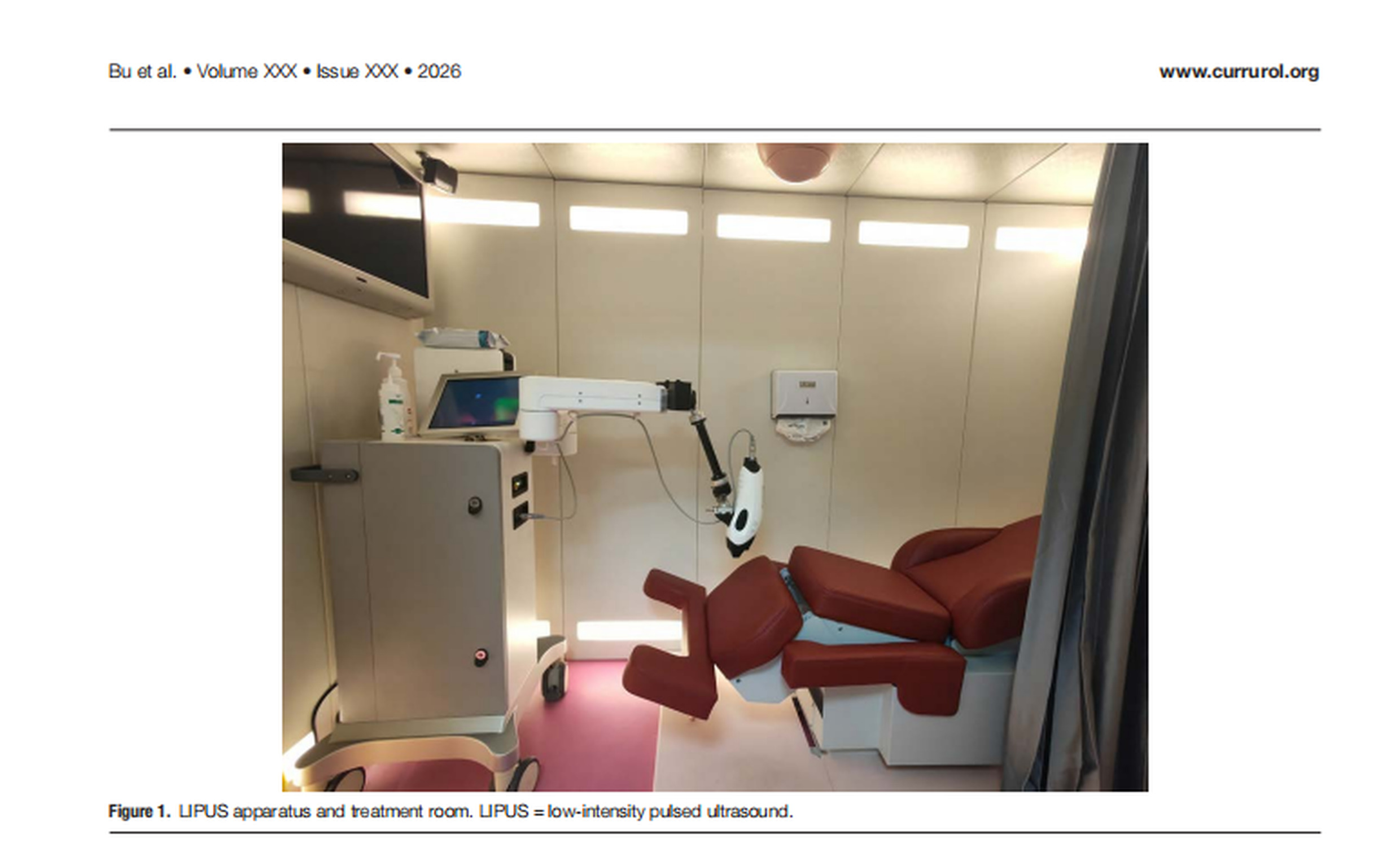
▲ Figure 1 of the paper: the WBL LIPUS device and the treatment room
Conducted from September 2020 to December 2021, the study screened 112 men; 52 began LIPUS treatment, and 43 completed the standard protocol and the week-8 evaluation. The treatment was a fixed course: 2 sessions per week for 4 consecutive weeks, 8 sessions in total; each session was applied to the left and right penile shafts and the left and right penile crura, 5 minutes per site, 20 minutes in total (intensity 0.3 W/cm2, frequency 1.7 MHz, pulse duration 200 μs, duty cycle 20%).
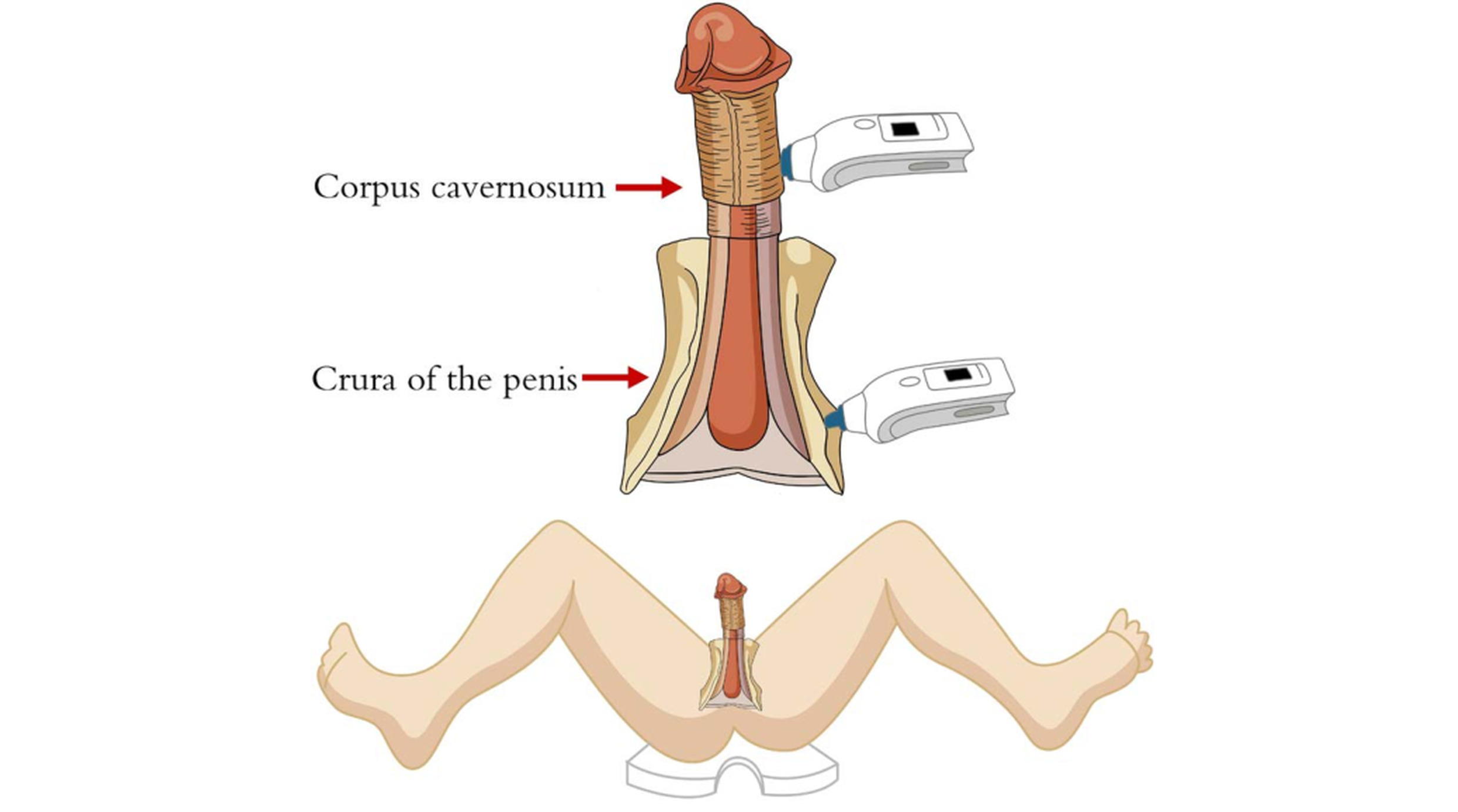
▲ Figure 3 of the paper: illustration of treatment sites — the corpora cavernosa and the penile crura
Week-8 Short-Term Results: A Clear Trend of Erectile Function Improvement
Among the 43 participants who completed the protocol and the paired evaluations, the paper reported the following within-group changes:
IIEF-EF score: increased from a baseline of 6.98 to 14.53, a mean improvement of 7.56 points (95% CI 5.38–9.73, p<0.001)
Clinically meaningful improvement: 22/43 (51.2%) reached the minimal clinically important difference (MCID) threshold of ≥7 points
Erection hardness (EHS): the median increased from grade 1 to grade 3; 31 men improved, 12 were unchanged, and none worsened
Morning erections: the proportion with morning erections increased from 54.8% to 81.0%
Psychological scales: PHQ-9 and GAD-7 scores decreased by a mean of 2.70 and 2.09 points, respectively
Safety: among the 43 cases with safety documentation, post-treatment pain VAS scores were all 0, and no adverse events were recorded
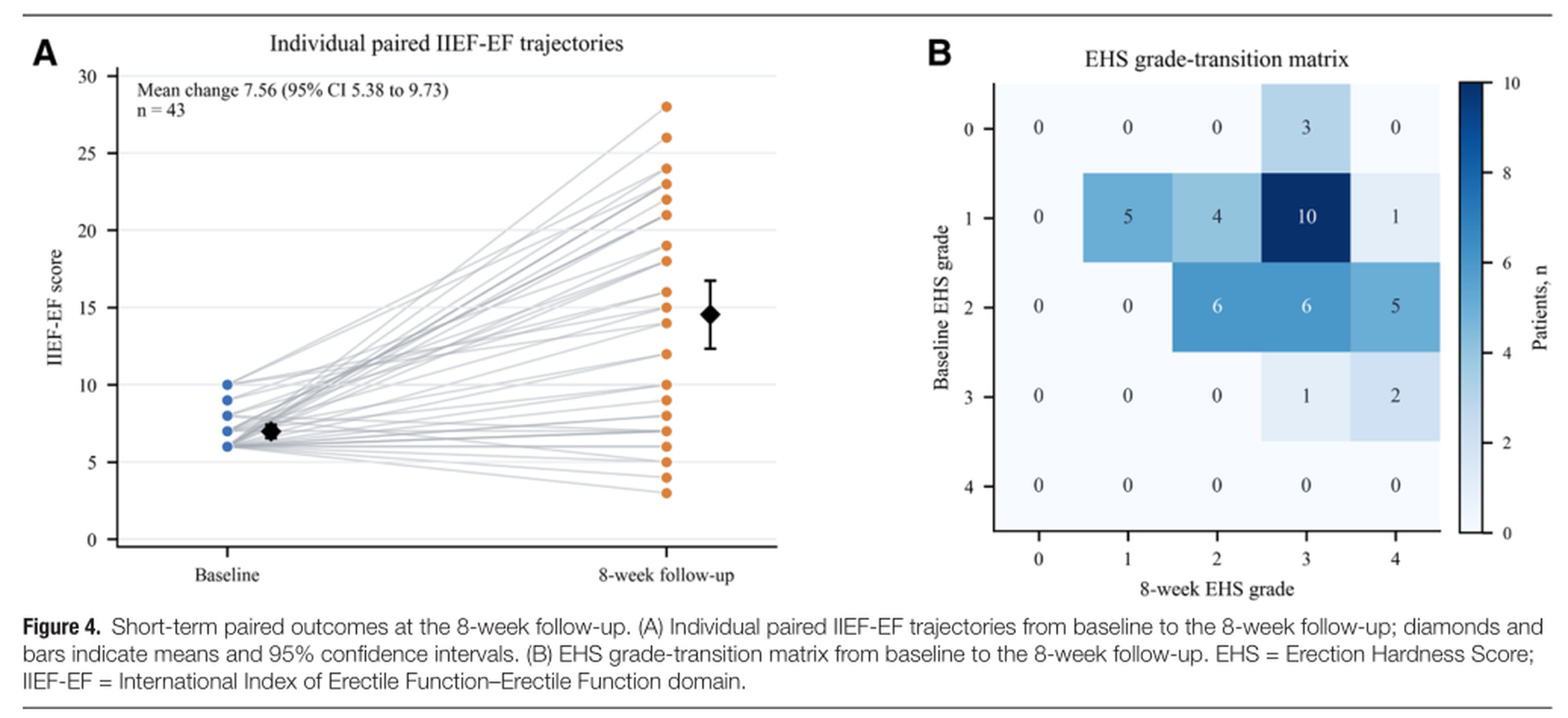
▲ Figure 4 of the paper: week-8 paired results. (A) Individual IIEF-EF change trajectories; (B) EHS grade transition matrix
3-Year Follow-up: Preliminary Signals of Long-Term Potential
As the participants were distributed across the country and could not all return to Shanghai for re-examination, the study team conducted structured telephone follow-up approximately 3 years later, which 20 participants successfully completed. The results showed:
80% reported successful penetration (SEP-2); 65% reported maintaining an erection to complete intercourse (SEP-3); 70% perceived their erectile function as improved compared with before treatment; and 55% reported improved sexual life satisfaction.
"That 65% could still maintain an erection to complete intercourse suggests that some patients maintained a relatively positive sexual function status for a considerably long period after treatment, and it also indicates the long-term therapeutic potential of LIPUS that merits further research."
— Interpretation of the study results by the Urology and Andrology team of Shanghai General Hospital
What This Study Means
For WBL, this represents an important piece of academic evidence: the study by the Department of Urology and Andrology of Shanghai General Hospital, Shanghai Jiao Tong University School of Medicine, fully documented the standardized clinical application of the WBL WBL-ED device in the severe ED population, together with short-term within-group improvement data and safety observations, and it was formally accepted for publication after international peer review.
The paper also rigorously points out that this was a single-arm, exploratory observational study with losses to long-term follow-up, and that the results need to be further verified in larger-sample, randomized controlled studies with sham-treatment controls. Together with the team's earlier multicenter randomized double-blind sham-controlled study in mild-to-moderate ED (Transl Androl Urol, 2019) and the randomized clinical study comparing 3 sessions versus 2 sessions per week (J Sex Med, 2022), these efforts constitute the continuous accumulation of the LIPUS clinical evidence system.
From mild-to-moderate to severe, from short-term observation to 3-year follow-up, the clinical exploration of WBL LIPUS is steadily moving forward. Whether LIPUS treatment is appropriate should still be comprehensively assessed by professional andrologists, who will formulate individualized plans.
The non-invasive exploration of severe ED now has another peer-reviewed piece of evidence with 3-year follow-up.
Scan the QR code below
to download the original clinical paper


About WBL | WBL Medical Group

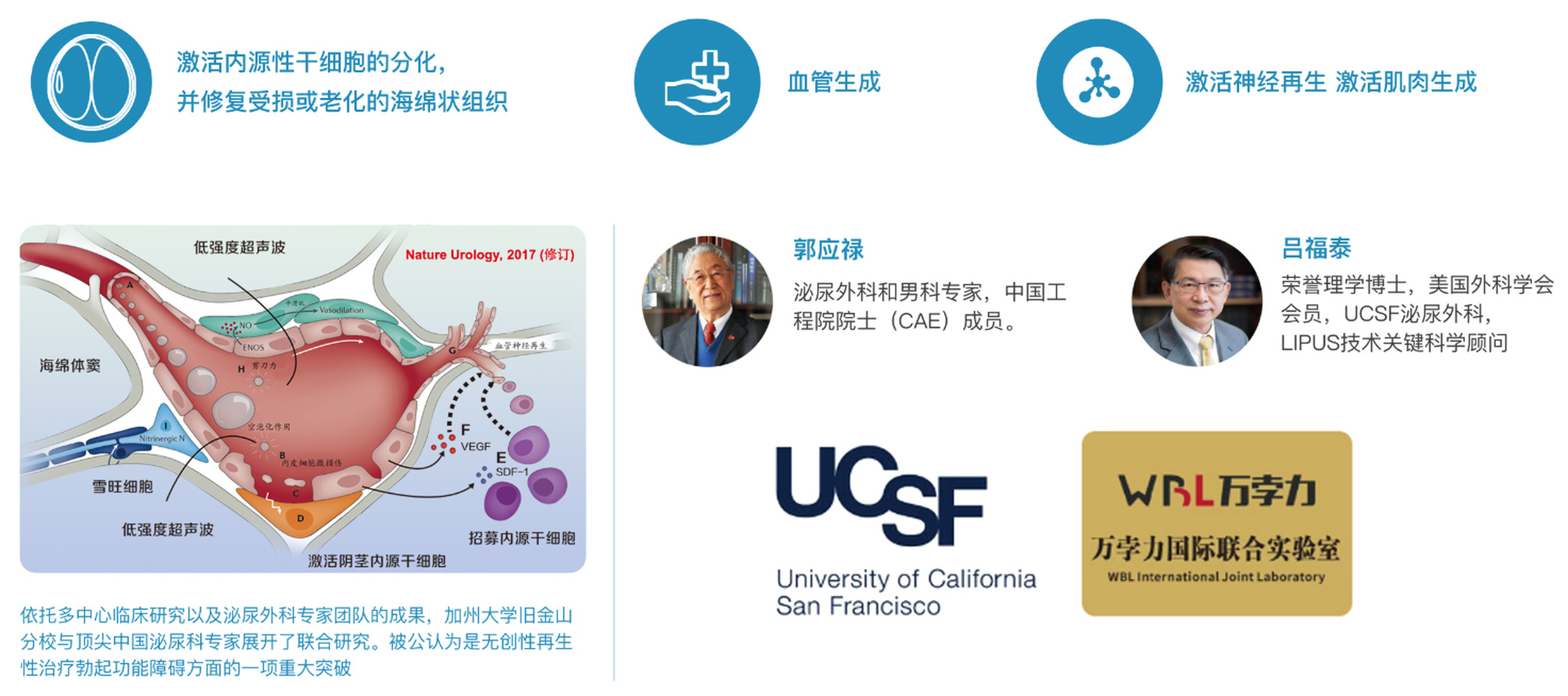
Beijing Wanbeili Medical Instrument Co., Ltd. (WBL) specializes in non-invasive men's health solutions. It is a National High-Tech Enterprise and a Beijing "Specialized, Refined, Distinctive, and Innovative" SME, and is certified under the ISO 9001 quality management system. The LIPUS (low-intensity pulsed ultrasound) technology was advocated by Academician Guo Yinglu; the company has carried out long-term industry-academia-research cooperation with leading urology and andrology experts at home and abroad, including the team of Professor Tom Lue (Fu-Tsai Lue) of the University of California, San Francisco (UCSF) and Professor Xin Zhongcheng, progressively completing clinical translation. The devices have been introduced in many domestic tertiary-A and prefecture-level hospitals and deployed at Chulalongkorn Memorial Hospital in Thailand. The product won the 2025 IDEA Design Award, and the company was featured in the CCTV program "Science and Innovation China" for this technology.
This article is an introduction to published medical research findings and general health education. It represents only what the research team has published and does not constitute diagnosis or treatment advice for any individual; relevant statements are subject to the original paper and the regulatory registration status in each country. If symptoms persist (e.g., for more than 3 months), it is recommended to visit the urology or andrology department of a regular hospital. Figures in this article are cited from the original paper, and the copyright belongs to the authors and the journal.